Best AI Travel Planner Apps in 2027: Ranked and Reviewed

Randy Allen
September 30, 2026 · 8 min read
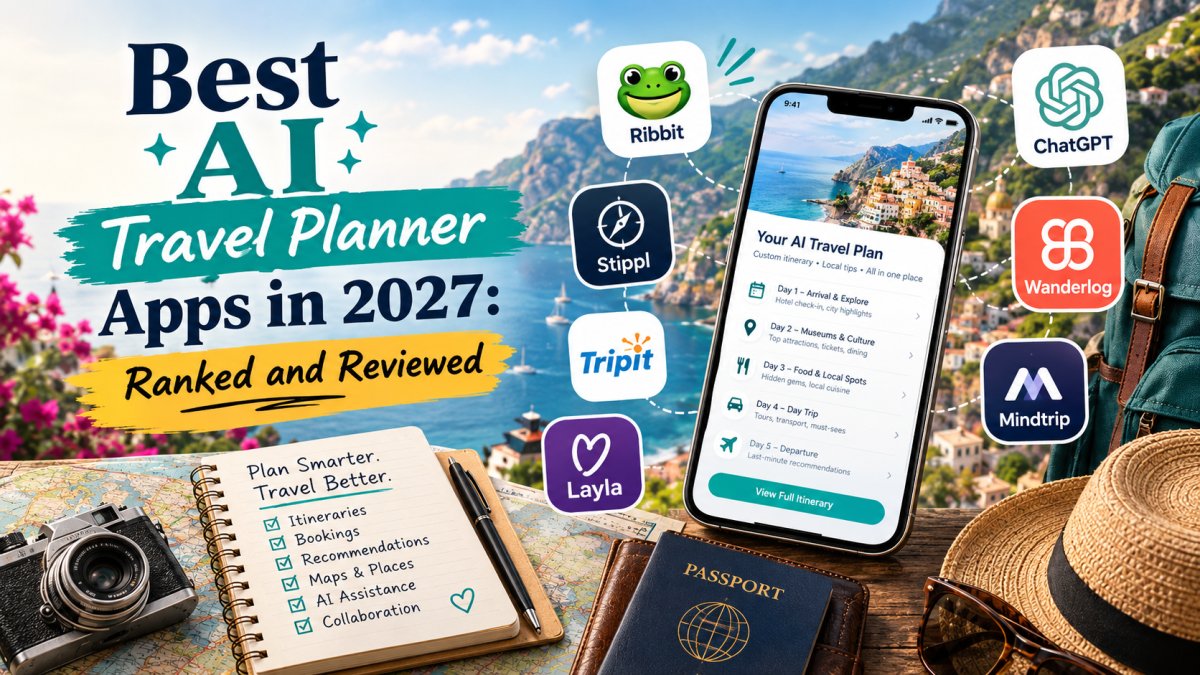
The AI travel planning space looks different heading into 2027 than it did a year ago. The biggest change: Expedia Group acquired Layla on July 31, 2026, pulling one of the more interesting independent AI planners into a large OTA. New tools have emerged. And the gap between apps that genuinely plan your trip and apps that just claim to has become easier to see.
This is not a list of every app with "AI" in its marketing. It's a ranked breakdown of the tools that actually deliver in 2027, what each one does best, and where each one falls short.
1. Ribbit — Best Overall AI Trip Planner for Mobile
Ribbit remains the most complete AI-native travel planner on iOS and Android. The core experience is built around Lily, an AI travel assistant who handles the actual planning rather than just answering questions about it.
Tell Lily your destination, dates, travel style, and group size, and she builds a full day-by-day itinerary. You can edit, rearrange, and adjust everything, but the heavy lifting is done. For most trips, you have a real working plan in under five minutes.
What makes Ribbit different in 2027:
Viator integration remains the most concrete differentiator. When Lily recommends an activity, she's surfacing an actual Viator listing with real availability, pricing, and reviews — one tap away from booking. You're not getting a generic suggestion, you're seeing a bookable experience.
Gmail booking scanning is automatic and included on the free plan. Your flight confirmations, hotel bookings, and reservation emails show up in your trip without forwarding anything manually. Most apps that offer this put it behind a paywall.
Ribbit covers the full trip management cycle: group itinerary sharing, co-traveler wishlists so everyone gets input before the plan is locked, packing lists, and budget tracking. It's a planning tool that stays useful after you've built the itinerary.
Pricing: Free plan available. Ribbit Pro is $4.99/month or $39.99/year with a 14-day free trial. The monthly option lets you subscribe for a single trip and cancel without committing to a full year.
Where it falls short: No web app yet. If you do most of your planning at a desktop, that's a current limitation.
Best for: Travelers who want AI to drive the planning process, anyone who wants real bookable activity recommendations, and people tired of manually tracking confirmation emails.
2. Stippl — Best for Expense Tracking
Stippl's clearest differentiator remains its budget tracker: real-time expense logging with per-person cost splitting. If granular group expense management is the specific gap you're trying to fill, it handles that well.
In May 2026 Stippl secured €575,000 in funding and launched a native hotel booking partnership with Nuitée, which adds real inventory to what was previously a planning-only tool. That's a meaningful upgrade.
Where it falls short: The paywall issue from 2026 persists. AI itinerary generation and booking confirmation import both require Pro. You invest time setting up your trip and then hit a wall before you can do anything with the output. The Pro plan is $24.99/year.
Best for: Group travelers whose primary need is detailed expense splitting and cost tracking.
3. Mindtrip — Best for Flight Booking Inside the App
Mindtrip launched Mindtrip Flights in May 2026, a conversation-led flight search and booking experience built on Sabre's inventory and PayPal's payment infrastructure. If you want to find and book flights through an AI interface rather than a traditional search engine, Mindtrip is the most capable option for that specific job.
The interface is polished, Viator integration surfaces bookable activities, and the consumer app remains free.
Where it falls short: Gmail booking scanning isn't available. Group collaboration and itinerary sharing are more limited than Ribbit's. Mindtrip's roadmap is shaped by enterprise partnerships (Sabre, PayPal) rather than individual traveler needs, which shows in what gets built.
Best for: Travelers who want AI-assisted flight search and booking as part of their planning workflow.
4. Layla (now part of Expedia) — Changed Significantly
Layla was acquired by Expedia Group on July 31, 2026. As of this writing it continues to operate as a standalone product, but its roadmap is now shaped by Expedia's commercial priorities rather than independent traveler needs.
What that means in practice: Layla's recommendations will increasingly surface Expedia Group inventory — Expedia.com, Hotels.com, Vrbo — rather than providing neutral suggestions across the full market. PriceLock, the feature that tracks flight and hotel prices 24/7 and alerts you to drops, remains one of the more genuinely useful premium features in this space. The $49.99/year premium unlocks unlimited planning and live pricing.
Where it falls short: It's no longer an independent tool. The recommendations it generates serve Expedia's booking funnel, not necessarily your trip.
Best for: Travelers who are already committed to booking through Expedia's ecosystem and want AI planning layered on top.
5. Wanderlog — Best for Manual Itinerary Building
Wanderlog's manual planning tools remain solid. The map view is useful for visualizing routes, the drag-and-drop itinerary builder gives you precise control, and collaboration features are well developed. For travelers who prefer to build their own schedule stop by stop, it's a capable tool.
Version 2.218 (August 2026) brought refreshed visuals and performance improvements, though no significant new features.
Where it falls short: The AI feels bolted on rather than central. Booking confirmation import is unreliable and paywalled. No bookable activity integration. Newer AI-native apps have largely passed it in terms of planning intelligence.
Best for: Travelers who want full manual control over their itinerary and prefer to do their own research.
6. TripIt — Best for Organizing Existing Bookings
TripIt doesn't plan trips, it organizes them. Forward your confirmation emails and it assembles everything into a clean master itinerary with offline access. For travelers who book across multiple platforms and want one view of their reservations, it remains the most reliable tool for that specific job.
TripIt Pro adds real-time flight alerts and seat tracking at $49/year.
Where it falls short: Zero planning capability. If you haven't booked yet, TripIt doesn't help you figure out what to do.
Best for: Business travelers and anyone managing complex multi-platform itineraries.
7. ChatGPT — Best for Brainstorming and Research
ChatGPT remains genuinely useful for the early stages of trip planning. Describe where you want to go and what kind of experience you're after, and it produces a thoughtful starting point quickly.
The hard limits haven't changed. No memory between sessions, no live pricing or availability, no way to know if a restaurant has closed, and you have to manually re-organize the output into an actual trip plan.
Best for: The first 20 minutes of planning a trip. Not a replacement for a dedicated travel app.
New in 2027: Apps Worth Watching
A few tools that weren't in our 2026 roundup have become more notable:
Stardrift has emerged as a more complete option with live flight and hotel pricing inside the plan and booking confirmation import. Worth watching.
iMean AI is strong at real-time price scanning across booking sites. More useful for fare hunting than itinerary building, but a solid companion tool.
Wonderplan is the best fully free, no-signup option for a quick single-destination day plan. No bookings, no imports, no group features — but genuinely fast and useful for simple trips.
What Changed in 2026
The most significant shift was consolidation. Layla's acquisition by Expedia means one fewer independent AI travel planner in the market. Stippl added native hotel booking. Mindtrip deepened its flight booking integration. The tools that were planning-only are increasingly becoming booking platforms, which is good for convenience but means their recommendations come with commercial strings attached.
The tools that remain independent — Ribbit, Wanderlog, ChatGPT, Wonderplan — give you recommendations that aren't shaped by which OTA owns the product.
The Honest Summary
Several apps in this space still generate an AI itinerary and then lock the output behind a paywall before you can do anything with it. You invest time, hit a wall, and are asked to upgrade. Ribbit gives you 20 free AI messages per month with itinerary saving and group sharing included in the free plan.
The right tool depends on what you actually need. If you want one app that takes you from a trip idea to a real itinerary with bookable activities and automatic booking import, Ribbit is the closest thing to that end-to-end experience on mobile right now. If expense tracking and group cost splitting are the priority, Stippl is stronger once you're on Pro. If you want AI-assisted flight booking in the chat, Mindtrip handles that better than anyone.
| App | Best for | Price |
|---|---|---|
| Ribbit | AI planning + activity discovery | Free / $4.99mo / $39.99yr |
| Stippl | Budget tracking + group splitting | Free / $24.99yr |
| Mindtrip | AI flight booking | Free |
| Layla (Expedia) | Expedia-integrated planning + price tracking | Free / $9.99mo / $49.99yr |
| Wanderlog | Manual itinerary building | Free / $39.99yr |
| TripIt | Organizing existing bookings | Free / $49yr |
| ChatGPT | Brainstorming and research | Free / $20mo |
Start planning your next trip with Ribbit — free to download, no credit card required.
Switching from Wanderlog? Read our full Wanderlog vs Ribbit comparison for a more detailed breakdown.